
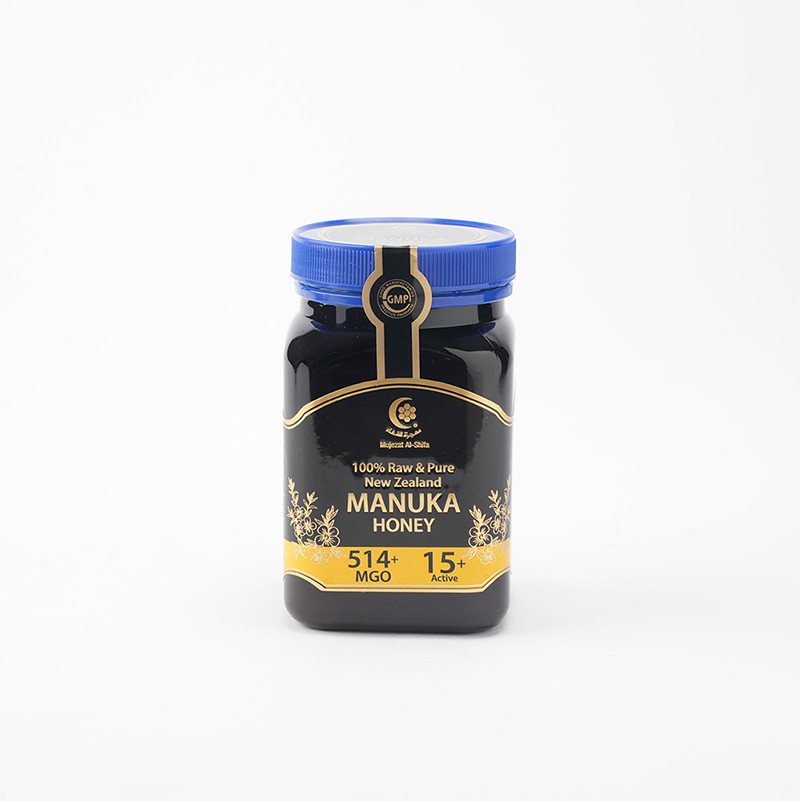

Manuka honey

16.500 KD
Size
SKU

Product Description

Manuka Honey UMF+15

Contains 514 mg of Methylglyoxal per kilogram of honey.

A natural honey with a creamy texture, resulting from bees feeding on the nectar of the Manuka tree flower, which grows only in New Zealand and parts of Australia. What distinguishes it from other types of honey is the unique active factor (Hydrogen Peroxide).

Its strength comes in grades starting from 5, 10, 15, 20, 25, 30, and is symbolized by Active or UMF. This can be easily measured by the percentage of pollen from the Manuka flower in the honey using a microscope.

Manuka Honey Components : 

Hydrogen peroxide is one of the components of honey; it gives honey most of its beneficial properties, but some types of honey...

The main antibacterial component in Manuka honey is the compound methylglyoxal, which is also present in most types of honey, but usually only in small amounts.

Manuka honey contains MG, which comes from the conversion of another compound called dihydroxyacetone, high concentrations of which are found in the nectar of Manuka flowers. It is believed that MG is responsible for giving Manuka honey its potency, and the high concentration of MG and the strength of its effect determine the true benefits of the honey

Benefits :

 Relieves digestive disorders

 Strengthens immunity

 Antacid, so it relieves heartburn

 Fights the stomach germ (Helicobacter pylori)

 Relieves gastroesophageal reflux

 Soothes symptoms of irritable bowel syndrome

 Relieves duodenal ulcers in the small intestine